
About Maulana Stud
We Bred To Be Different
A stud of Egyptian Arabians on the Cairo–Ismailia Road — what we breed for, what we hold to, and why we would rather wait than settle.
The Stud
Everything here follows from one decision.
Maulana Stud breeds Egyptian Arabian horses on the Cairo–Ismailia Road at Kilometre 50. They are bred, foaled and raised on the same ground, under the arches that give the farm its shape, and they are handled by the people who bred them.
The decision is simply that quality is not negotiable — and that a breeding programme which negotiates it once will negotiate it again. Everything below is what that costs and what it buys.
“We Bred To Be Different” is the stud's own sentence. Read the rest of this page as the long form of it.
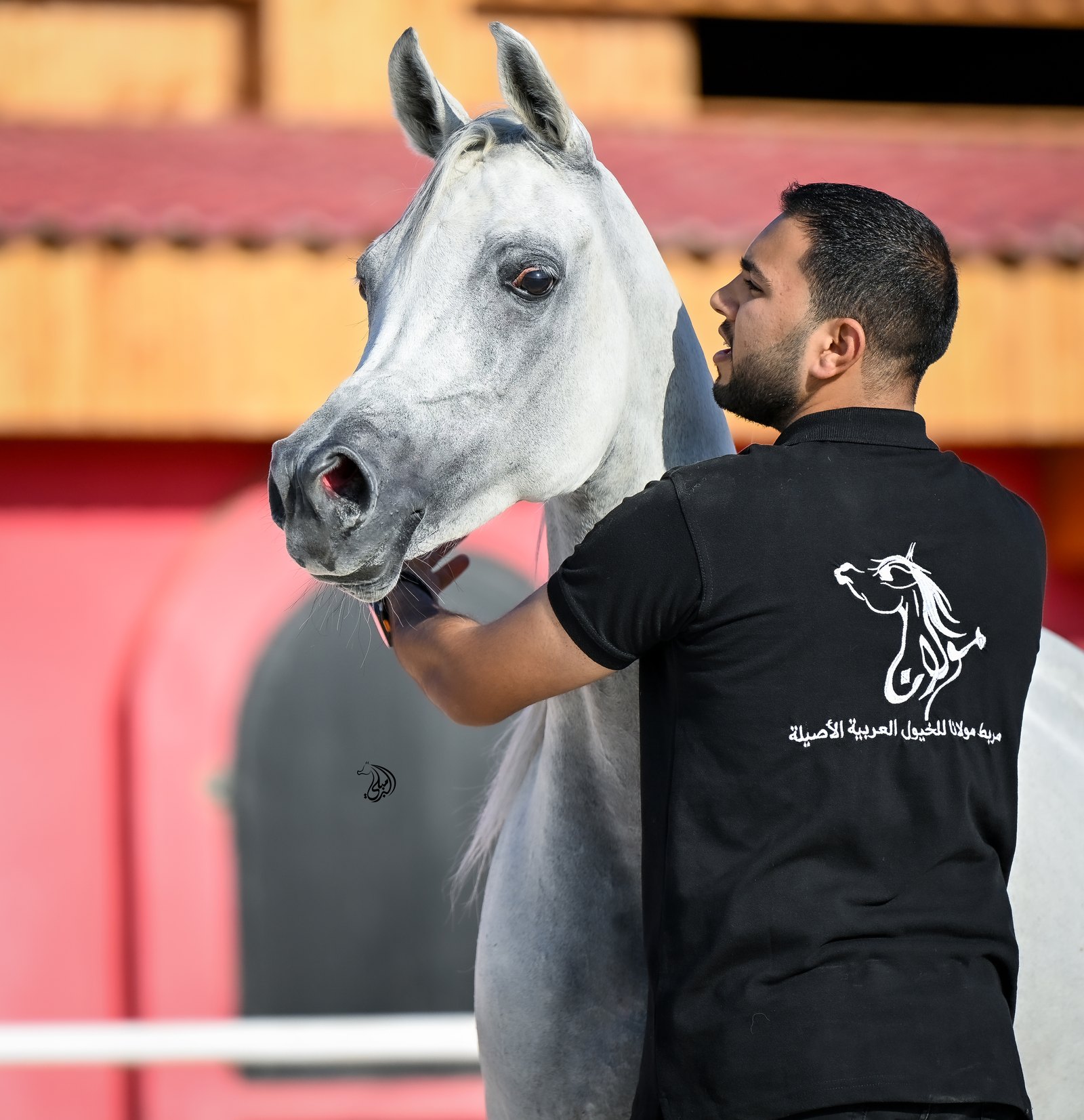
Our Breeding Philosophy
Every pairing has to argue for itself.
A breeding decision cannot be taken back. So we make each one slowly, and we judge it against the horse it is meant to produce — never against the season it is meant to fill.
What we are looking for does not move: correct type, a good mind, and the soundness to carry both forward. A horse that has two of the three is a horse we admire; it is not necessarily a horse we breed from. The discipline is in the third one.
The practical form of this is that we say no more often than we say yes, and that we are willing to skip a year rather than accept a compromise that will surface in a foal three years later. Fashion moves faster than a gestation; a programme that chases it is always arriving late to somewhere it did not want to be.
A mare tells you what she needs. The work is being willing to hear it, and patient enough to wait for it.
Preservation of Heritage
Custody, not invention.
The Egyptian Arabian arrives as an inheritance before it arrives as an animal.
Nothing about this breed is ours to redesign. It was assembled by other people, over a very long time, and handed on. Our job is to pass it on intact — and, where we can, a little better than it reached us.
That is not nostalgia. Preservation is an active, unglamorous, daily practice: it means keeping the character of the breed legible in each generation rather than letting it blur into whatever the ring happens to reward this year. A horse can win and still be a step away from the thing it is supposed to be. We try very hard to notice the difference.
It is also a matter of paperwork, and we treat it that way. A pedigree is not a story a farm tells about itself — it is a record, held in the stud's own books and in its registration papers, and it either says what you claim it says or it does not. That is why the pedigree fields throughout this site are still empty rather than filled with something plausible. An empty field can be completed. A wrong one travels.
We did not make this breed. We are only responsible for the part of it that passes through our hands.
Commitment to Excellence
The standard is the same on a quiet Tuesday.
Nobody is watching most of the time. That is exactly when it counts.
Excellence at a stud is not a performance put on for visitors. It is what the yard does at six in the morning when there is no one to impress: feet, feed, water, turnout, hands on every horse, every day, and a note made of anything that is half a degree off.
We hold to it in three places in particular:
- In the routine. Consistent handling from the first days, so that a horse's manners are built rather than installed later under pressure.
- In the honesty of the presentation. A horse is shown to a buyer as it is, in daylight, at home, and the questions get answered straight — including the ones with inconvenient answers.
- In what we are prepared to keep. A horse that does not meet the standard is not quietly reclassified into meeting it.
None of that is dramatic and none of it photographs well. It is simply the difference between a stud and a collection of horses.
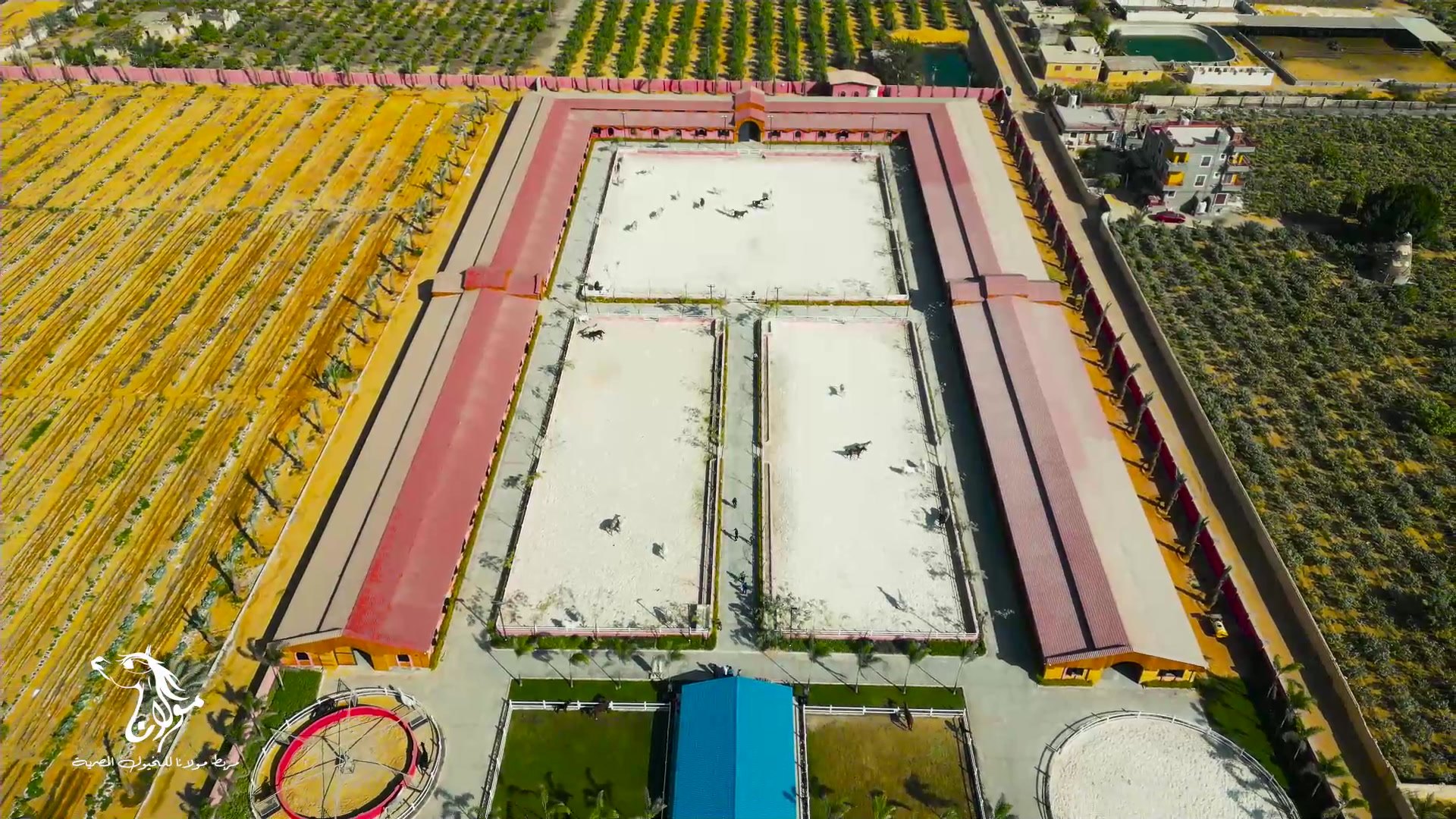
Focus on Quality
Chosen, not accumulated.
A stud is defined by the horses it decided not to keep.
We are not trying to breed many horses. We are trying to breed the right ones — and the only way to do that is to be ruthless about the difference.
Volume is the easiest thing in the world to produce and the hardest thing to undo. Every extra horse is another mouth, another set of feet, another claim on the attention that the good ones need; and a yard that is full has already made its decisions for it. So we keep the programme small enough that every horse in it is there for a reason we could defend out loud.
For a buyer this has a plain consequence. When we say a horse is good, we are not grading on a curve of our own making, and we are not trying to move stock. If a horse is not right for you, we would far rather say so than sell it to you — a wrong sale costs us more, and for longer, than an empty stall ever will.
A Legacy of Excellence
A legacy is a verdict other people reach.
It is not something a farm can award itself, and it is not built in a season. It is the accumulated weight of small refusals: the pairing not made, the foal not rushed, the sale not pushed, the claim not made because it could not be backed.
What we can promise is the method. The horses are bred on one ground, by the people who will answer the phone about them, to a standard that does not move when nobody is looking — and every fact we publish about them will be one we can put a document behind.
The horses will make the argument better than this page can. Come and see them, or call and ask us anything.